
May 10–16, 2026 · The week distribution beat product
This Week
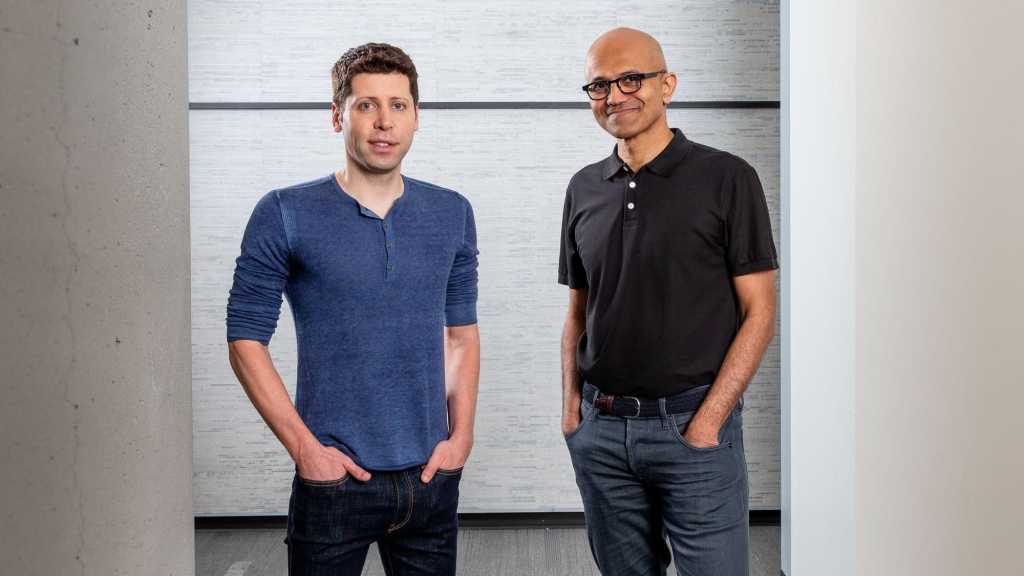
One structural move ran through the week. Microsoft and OpenAI formally unwound their exclusive partnership. OpenAI opened its self-serve Ads Manager to every business in the United States. The NFL announced a record nine international games across four continents. Oklahoma City swept the Lakers to go 8-0 in the playoffs. Different industries, one logic: the scarce asset is no longer the product — it is a reliable channel to an audience, and everyone is fighting to own one rather than rent it.
Sneakers — What Dropped, What It Means
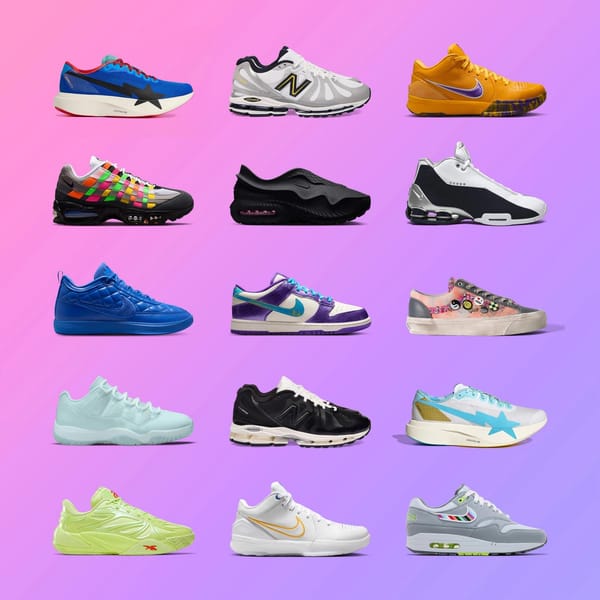
The May release calendar reads like an archive index. The Nike Air Griffey Max 1 "Freshwater" returned May 15 at $170 — a 1996 cross-trainer revived for an audience that mostly was not alive to buy the original. Jordan Brand stacked the month: the Air Jordan 3 OG "World's Best Dad" ($215) and "Brazil" ($225) on May 16, the Air Jordan 4 "Toro Bravo" ($220) and Nike Air Foamposite Pro "Gym Red" ($240) closing it out.
Where the calendar is not retro, it is licensed. The Coca-Cola x adidas Originals collection arrives June 3 across six silhouettes; the Bad Bunny x adidas "Flamboyan" ballerina drops May 30 at $120; the adidas Samba Jane "Jessie" released May 13 at $110, timed to Pixar's Toy Story 5.
The system story underneath: brands are not selling new shoes, they are selling pre-validated demand. A retro silhouette or a licensed partner — Coca-Cola, Pixar, Bad Bunny — is a distribution shortcut: built-in audience, lower acquisition cost, predictable sell-through. When a brand leans this hard on archive and IP, it is telling you the cost of building net-new demand has climbed past the point where building it is worth doing.
Sports — The Business Behind the Game
The NBA's conference finals are set, and the bracket rewards one roster-building philosophy. Oklahoma City swept the Lakers for the first 8-0 playoff start in franchise history. The San Antonio Spurs eliminated Minnesota, with Victor Wembanyama posting 27 and 17 in the Game 5 rout. The Knicks swept the 76ers; Cleveland and Detroit pushed to a Game 7. The thread: OKC and San Antonio were both built through the draft — owned, internally developed talent — and both are advancing past teams assembled from acquired stars. In a hardened-cap era, the owned-pipeline model is the one that survives.
The other structural story was the NFL's 2026 schedule release: a record nine international games, four continents, eight stadiums, opening Week 1 with the 49ers in Melbourne. The domestic market is saturated, so the league is exporting the channel itself. For anyone building brands in or around sports, that is the read worth keeping: nine international games is nine new local-market sponsorship inventories, and the money follows the channel expansion before it follows the score.
Culture — What's Moving and Why
Drake released Iceman on May 15 — 18 tracks, his first solo album since 2023, with Central Cee, Yeat, and Cash Cobain. The track count is not an artistic accident; it is a distribution strategy. More tracks mean more catalog surface area inside the streaming system, more entries on the chart, more cumulative streams. Volume is the channel play.
The clearer signal came from the other end of the format cycle. Stephen Colbert's final Late Show airs May 21, ending CBS's 33-year franchise. CBS is not replacing the host — it is exiting the format. Linear late-night was a distribution channel; the audience moved to clips, podcasts, and feeds, and the channel shrank beneath a format the network still technically owned. Owning a format means nothing once the channel underneath it collapses.
Two releases cut the other way: the All-American Rejects' "Sandbox" — their first album in 14 years, released independently with no label — and Johnny Drille's sophomore album, another marker of Afrobeats' global distribution push. The pattern is consistent: artists with audiences are increasingly choosing to own the channel to them.
On Your Radar — Apply This to Your Week
For marketers: OpenAI's self-serve Ads Manager is now open with no minimum spend — the platform did $100 million in its first six weeks. If you run paid acquisition, test a small ChatGPT campaign now, while cost-per-click sits pre-saturation. The arbitrage window on any new ad channel closes fast; the early test is cheap and the data is not replaceable later.
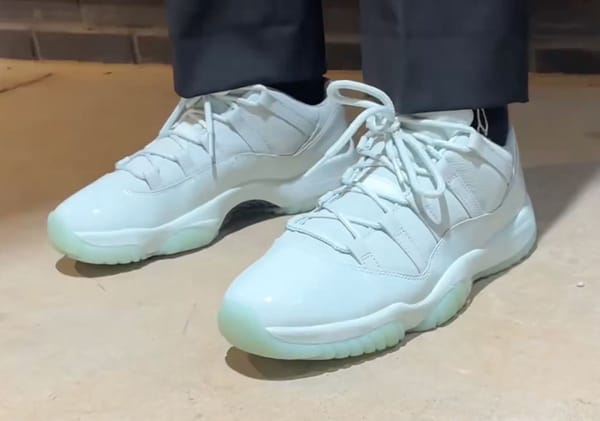
For sneaker investors: Watch resale on the Nike Air Griffey Max 1 "Freshwater" over the next 30 days. A revived non-basketball cross-trainer with no current signature athlete is the cleanest test on the calendar of whether pure nostalgia carries a durable premium or just a launch-day spike.
For anyone managing a partnership: The Snap–Perplexity split and the Microsoft–OpenAI reset are the same lesson twice. Exclusivity that made sense during a land-grab becomes a liability once the market matures. Audit your own lock-in deals this week — which are still strategic, and which are just inertia wearing a contract?
The Uristocrat Take
In a saturated market, the product is not the moat — the channel is. Microsoft and OpenAI both concluded that owning their own distribution beats sharing one, even at the cost of a partnership that defined the AI era. The NFL is buying channel by the continent. Sneaker brands are renting it through licensed IP because building it has gotten too expensive. And Colbert's exit is the warning label: you can own a format completely and still lose if the channel beneath it is draining. The question worth carrying into next week — for a company, a brand, or a career — is simple. Are you investing in a channel you own, or one you are renting on terms someone else can reset?
Recent From Uristocrat
- The Daily Roundup — May 15, 2026
- The Daily Roundup — May 14, 2026
- The Daily Roundup — May 13, 2026
- The Daily Roundup — May 12, 2026
- The Daily Roundup — May 11, 2026
The Intelligence Brief publishes every Saturday. All stories in full at uristocrat.com. If this was useful, send it to someone who'd say the same.
Comments